
Ontario market insight · Seller advice
Ontario New Home Sales Jump 61%. Is It Time Resale Sellers Got Creative Again?
New construction is getting government incentives. Resale homes aren't. Here's why sharper pricing and a little creativity may matter more than ever for sellers.
By Carmen Lombardi, REALTOR® Broker · · 11 min read
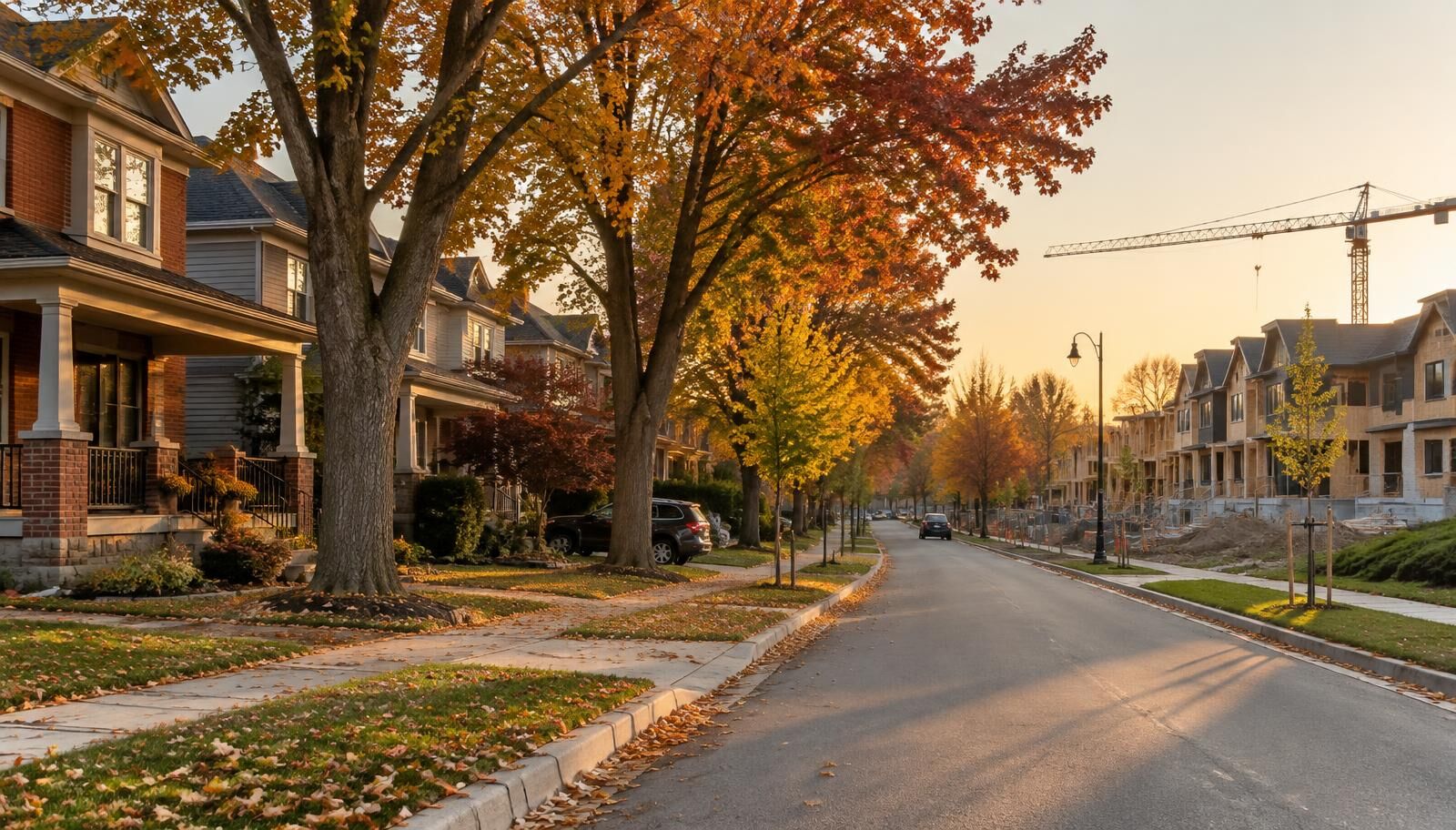
Ontario's new construction market is showing some encouraging signs. But I think there's a bigger story here, and it's one that every homeowner thinking about selling should be paying attention to.
According to a November 3 report from the Building Industry and Land Development Association (BILD) and the Ontario Home Builders' Association (OHBA), new home sales across Ontario jumped 61% in the third quarter of 2026, reaching 7,914 units.[1]
That's nearly 8,000 new homes sold in just three months.
And here's what's interesting.
Nearly 3,000 of those sales were estimated to be additional sales directly attributable to the government's enhanced HST rebate program.
Think about that for a moment.
Almost 3,000 additional buyers entered the new construction market because the financial incentives made purchasing more attractive.
That's a pretty significant response.
And I understand why the government is doing it.
New home construction creates jobs. It supports skilled trades, suppliers, manufacturers and dozens of other industries that rely on housing development.
When homes get built, people work.
So I actually think incentivizing new construction makes sense.
But where does that leave everyone trying to sell an existing home?
New Homes Are Getting Government Incentives. Resale Homes Aren't.
Ontario's enhanced HST rebate program has made purchasing eligible newly constructed homes considerably more attractive.
And the federal government is now proposing to go a step further.
In its November 2026 budget, Ottawa proposed extending the foreign-buyer ban on existing residential properties until January 1, 2029, while introducing an exemption for newly constructed homes.[4]
That proposal has not yet become law, but the direction is pretty clear.
The government wants to stimulate construction.
Again, I understand the reasoning. More construction means more jobs, more economic activity and eventually more housing supply.
But resale homeowners are facing a different reality.
According to the Toronto Regional Real Estate Board (TRREB), GTA resale home sales declined 7.9% year over year in October 2026, with 5,603 homes sold.[3]
The average selling price was also down 2.7% compared with October 2025.
And buyers have become much more cautious about what they're willing, or even able, to spend.
So we're watching one part of the housing market receive meaningful financial incentives while another part is left to navigate the slowdown largely on its own.
And it's not as though these are two completely separate markets.
Many people who purchase new construction already own a home. They need to sell that existing property before they can move.
If the resale market isn't moving, that eventually affects the new construction market too.
Now Add the First Interest Rate Increase Since 2023.
As if navigating a slower market wasn't challenging enough, the Bank of Canada increased its policy interest rate on October 28, 2026.[2]
It raised the rate by 25 basis points, bringing it to 2.5%.
That was the first increase since July 2023.
Now, 0.25% might not sound like much.
But when you're purchasing a home, small changes in interest rates can have a meaningful impact on affordability.
Depending on a buyer's income, debts, mortgage amount and qualifying rate, a higher interest rate can reduce how much mortgage they qualify for.
For some buyers, changes in financing conditions can mean tens of thousands of dollars in lost purchasing power.
Let's say a buyer who was previously comfortable shopping around $800,000 now discovers that their financing only supports a purchase closer to $770,000.
That's a $30,000 difference.
To be clear, that's an illustrative scenario, not a calculation of what the Bank of Canada's latest quarter-point increase automatically does to every buyer's qualification.
But it shows why even relatively small changes in borrowing power matter.
Because here's the thing.
A seller might think their home is only overpriced by $20,000 or $30,000. But for a buyer who's already stretched to their financing limit, that difference isn't small at all.
It can be the difference between being able to buy the property and not qualifying for it.
And that brings me to another issue I think sellers need to pay much closer attention to.
In This Market, Your Pricing Window May Be Much Narrower Than You Think.
There's an aviation expression called coffin corner.
It's a term used to describe a situation where an aircraft has a very narrow operating margin between flying too slowly and flying too fast.
There's very little room for error.
And while the real estate market obviously isn't an airplane, I think there's an interesting comparison here.
For resale homeowners, the margin between a price that attracts qualified buyers and one that pushes the property outside their reach may be getting smaller.
You still want to protect your home's value.
But you also need your asking price to fall within the range buyers can actually afford.
And in this environment, that window can be surprisingly narrow.
I've always believed that pricing is one of the most important parts of selling a property, but I think it's becoming even more critical now.
Depending on the property and the competition, I would be looking very carefully at price differences of even $10,000 to $15,000.
Not because every home has a fixed $15,000 pricing window, but because small differences can affect which buyers see the property, which buyers can qualify and how your home compares with similar listings.
For example, if buyers are searching for properties up to $750,000, a home listed at $759,900 may never appear in their search results.
Even though the difference is less than $10,000.
And with mortgage affordability being squeezed, you can't automatically assume those buyers can simply increase their budgets.
The right price doesn't just influence what buyers are willing to pay. It determines whether some buyers can consider the property at all.
That's why I think we need to become much more precise about pricing.
But price isn't the only tool sellers have.
Maybe It's Time We Brought Back Creative Seller Incentives.
One of the things I find interesting about real estate is how often we forget what people did in previous market cycles.
We've become so accustomed to certain ways of selling homes that sometimes we overlook strategies that were used decades ago.
During the high-interest-rate environment of the 1980s and the housing downturn of the early 1990s, creative financing arrangements and seller incentives were part of the conversation.
One example was the vendor take-back mortgage.
Instead of having the purchaser borrow the entire amount through a conventional lender, the seller would finance part of the purchase themselves.
These arrangements could give buyers access to financing terms they might not otherwise have been able to obtain.
There were also sellers offering favourable mortgage terms as a selling feature.
For example, a historical Toronto listing from 1989 reportedly advertised a seller-financed mortgage at 11.5%, when conventional mortgage rates were around 13.5%.[6]
That was a meaningful incentive.
Rather than just lowering the property's price, the seller was trying to address the buyer's financing costs.
And the idea of incentives extended beyond mortgages.
During the sluggish housing market of the mid-1990s, builders were offering things like reduced mortgage rates, appliances, finished recreation rooms and other extras to attract buyers.
A February 1996 Statistics Canada housing report discussed exactly these kinds of builder promotions.[5]
The thinking was simple.
If buyers weren't responding, sellers needed to find ways to make purchasing more attractive.
And maybe that's something worth revisiting today.
Five Incentives Resale Sellers Could Consider in 2026
I'm not suggesting that every homeowner needs to start giving away thousands of dollars in incentives.
And I'm certainly not saying that incentives can compensate for an overpriced home.
But depending on the circumstances, there may be opportunities to make a resale property more competitive without relying exclusively on price reductions.
1. Offer Help With Closing Costs
For first-time buyers, coming up with the down payment is only part of the challenge.
There are legal fees, land transfer taxes, adjustments, moving costs and all sorts of additional expenses.
A seller could explore offering a negotiated contribution toward eligible closing expenses, provided the arrangement is permitted by the buyer's mortgage lender.
For someone struggling with upfront costs, that might be a more useful incentive than a comparable reduction in the purchase price.
2. Consider Creative Financing Arrangements
Vendor take-back mortgages have been around for a long time, although they're certainly not suitable for every situation.
Under the right circumstances, a seller might consider financing a portion of the purchase price.
Alternatively, a seller could explore contributing toward a lender-approved mortgage interest rate buydown.
These strategies require careful legal and financial advice, and lenders and mortgage insurers may impose restrictions.
But the principle is interesting.
If financing is what's holding buyers back, perhaps there's an opportunity to address that directly.
3. Offer Upgrades Instead of Just a Price Reduction
Builders do this all the time.
Appliance packages. Upgraded flooring. Finished basements. Decorating allowances.
Why couldn't resale sellers do something similar?
Perhaps the home needs a new appliance package.
Maybe the flooring is dated, or there's a minor improvement that could make a meaningful difference to the buyer.
Instead of spending money on an arbitrary improvement before listing, a seller could potentially negotiate an upgrade or repair that the buyer actually wants.
4. Reduce the Buyer's Uncertainty
One of the advantages of new construction is that buyers often feel more comfortable knowing the property is new and comes with applicable warranty protection.
Existing homes don't necessarily offer that same reassurance.
But resale sellers can take steps to give buyers more confidence.
A recent professional home inspection, documented repairs, servicing of major mechanical systems or a suitable home warranty could help reduce some of the uncertainty.
In a market where buyers are cautious, that confidence may be valuable.
5. Make the Transaction Easier
Not every incentive needs to involve money.
Flexible closing dates, professional cleaning, including certain furnishings, or accommodating a buyer's particular circumstances can make a property more appealing.
Sometimes it's the small things that make one home stand out from several similar options.
But None of This Works If the Home Is Overpriced.
This is probably the most important part of the conversation.
If your home is significantly overpriced, throwing in a new refrigerator isn't going to solve the problem.
And offering a $10,000 incentive doesn't necessarily make more sense than simply reducing your asking price by $10,000.
It depends on what the buyer needs.
A buyer who is concerned about long-term property value might prefer a lower purchase price.
Another buyer who has sufficient income but limited funds available for upfront expenses might benefit more from an appropriately structured incentive.
The key is understanding your buyer and what is preventing them from moving forward.
But before you get creative with incentives, you need to get the pricing right.
I think that's especially important now that borrowing costs have started rising again.
Sellers need to understand that buyers aren't always negotiating simply because they want a better deal.
Sometimes they're negotiating because their financing genuinely doesn't allow them to go any higher.
And that's a very different situation.
Resale Sellers May Need to Start Thinking More Like Builders.
For years, especially during strong markets, selling real estate was often relatively straightforward.
Price the home, prepare it properly, take great photographs, market it and wait for buyers to respond.
And for a long time, there were enough buyers that sellers didn't need to think too creatively about incentives.
But we're in a different market now.
Buyers have more options.
They're comparing properties more carefully.
They're paying attention to financing costs, maintenance expenses and how much work a home might need after they purchase it.
Meanwhile, builders are actively competing for those buyers with rebates, promotions, upgrades and financial incentives.
So perhaps resale sellers need to start thinking a little more like builders.
Not necessarily by giving things away.
But by understanding what motivates buyers and finding ways to make their properties more attractive.
The answer isn't always a bigger advertising budget.
And it isn't always another price reduction.
Sometimes it might be a better financial arrangement, fewer upfront expenses or a property that offers a little more certainty.
My Take: The Market Is Telling Us Something.
I think the government's efforts to stimulate new construction make sense.
Housing construction supports jobs, businesses and the broader economy.
But we also need a functioning resale market.
People need to sell their existing homes so they can move up, downsize, relocate or purchase new construction.
And right now, existing homeowners are facing a very different set of challenges than builders.
What stands out to me most from these latest numbers is that nearly 3,000 additional new home sales were attributed to the government's financial incentives.
That's a pretty powerful example of how incentives can influence buyer behaviour.
At the same time, the Bank of Canada's first interest rate increase since 2023 is a reminder that affordability is still a very real concern.
Buyers are watching their budgets.
And sellers need to understand just how much a relatively small difference in price can matter.
So I think there are two things resale homeowners should be focusing on right now.
First, be much more precise with your pricing.
Understand the competition, the price brackets buyers are searching within and what qualified purchasers can realistically afford.
Second, don't be afraid to think creatively.
Maybe there's an incentive, improvement or financing arrangement that makes your property more attractive without simply continuing to reduce the asking price.
We've seen these strategies used in previous housing cycles.
Perhaps it's time we started talking about them again.
Because if government incentives are helping move new construction forward, resale homeowners may need to create some incentives of their own.
And in today's market, a little creativity, combined with the right price, might make all the difference.
If you're weighing a sale in Guelph, my Guelph Seller Guide walks through pricing and preparation, the latest Guelph market update shows what local homes are doing, and the commission calculator estimates what you'd walk away with.
Frequently Asked Questions
Why did Ontario new home sales increase 61% in 2026?
Ontario recorded 7,914 new home sales in the third quarter of 2026, an increase of 61% compared with the same period in 2025. BILD and OHBA attributed nearly 3,000 incremental sales to the enhanced HST rebate program.
Does Ontario's new-home HST rebate apply to resale properties?
Generally, no. The enhanced program targets qualifying newly constructed homes. Ordinary resale homes are generally exempt from HST and do not receive this particular new-home rebate.
How does a Bank of Canada interest rate increase affect homebuyers?
Higher interest rates can increase borrowing costs and may reduce mortgage qualification amounts. The impact depends on mortgage pricing, lender requirements, the buyer's debts and income, and the applicable mortgage stress test.
What incentives can Ontario resale home sellers offer?
Depending on the circumstances, sellers could consider lender-approved closing-cost contributions, negotiated repairs, appliance packages, flexible closing dates or appropriately structured financing arrangements. Incentives should be reviewed with relevant legal and mortgage professionals.
How important is pricing when selling a home in Ontario?
Pricing affects buyer interest, financing affordability, search visibility and how a property compares with competing listings. In slower markets, careful attention to common buyer search-price thresholds can be especially important.
Sources and Further Reading
- BILD and OHBA, November 3, 2026: Ontario New Home Sales Rise 61% in Q3
- Bank of Canada, October 28, 2026: Policy Rate Increased to 2.5%
- TRREB, November 4, 2026: October 2026 GTA Housing Market
- Government of Canada: Budget 2026 — Housing and Economic Measures
- Statistics Canada: The Daily, February 9, 1996
- Toronto Realty Blog: Historical Vendor Take-Back Mortgage Example

About Carmen Lombardi
Carmen is a REALTOR® Broker with Re/Max Real Estate Centre Inc., Brokerage in Guelph, helping homeowners price, prepare and sell with real local numbers. More about Carmen · Get in touch
Topics: Ontario Real Estate · Ontario Housing Market · Guelph Real Estate · Home Selling Tips · Resale Homes · New Construction · Mortgage Rates · Seller Incentives · Real Estate Market 2026
This article is general information, not legal, tax or mortgage advice. Incentives and financing arrangements should be reviewed with a lawyer and mortgage professional before they're offered.
Related
Keep reading
- The Guelph Seller GuidePricing, preparation, marketing and closing, step by step.
- Guelph market updateThe latest monthly Guelph sales, prices and inventory.
- Sell, rent or stay?Compare your options with real numbers.
- What's my home worth?A local, comparable-sales based value for your Guelph home.
Next step
Thinking about selling in a slower market?
Carmen will look at your pricing bracket, the competition and which incentives, if any, could actually help your home stand out.